

Chattanooga Carpal Tunnel Chiropractor
Non-Surgical Relief Through Wrist-Specific Adjusting

If you've been searching for non-surgical carpal tunnel relief in Chattanooga, you may have already discovered something surprising: chiropractic care can help! Chiropractic adjustments that relieve compression of the main nerve pathway in the wrist can help reduce carpal tunnel syndrome symptoms.
Here’s the kicker though: most chiropractors do not actually adjust the wrist! But at Quantum Chiropractic — Hand & Foot Clinic, we do!
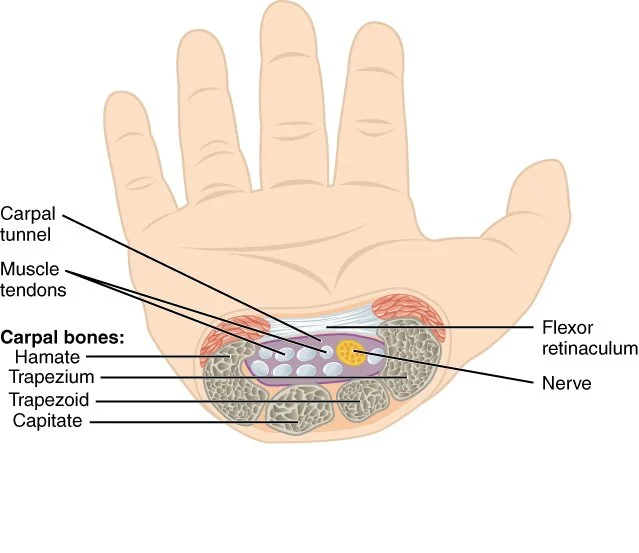
That matters because carpal tunnel syndrome is, at its core, a wrist problem. The condition is named for the carpal bones, the eight small bones of the wrist that form the narrow tunnel an important nerve, the median nerve, passes through. Think of the tunnel passageway as about the width of a pencil. When those bones lose their proper alignment or motion, the tunnel narrows, and the nerve inside gets squeezed or irritated.
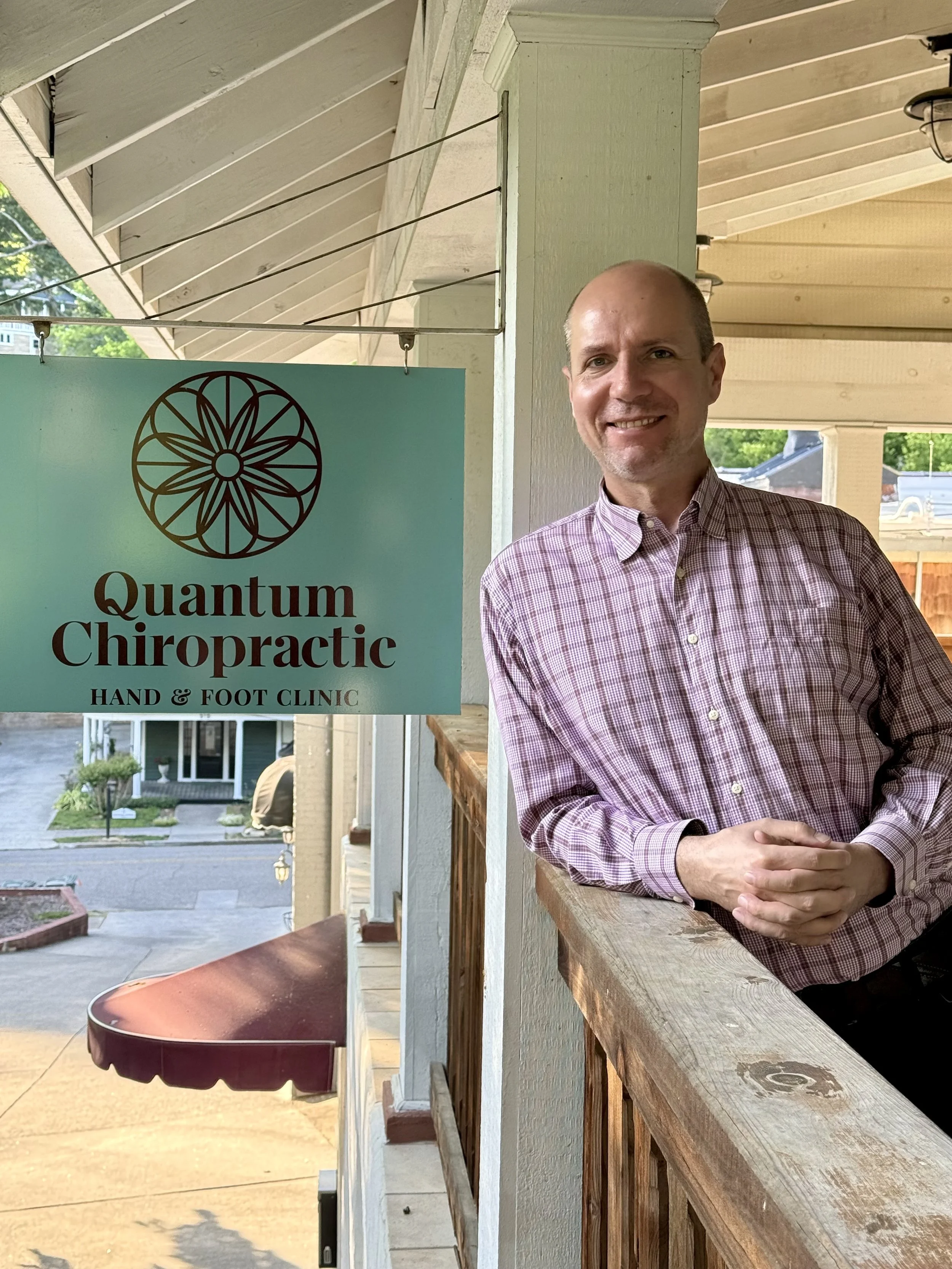
Dr. Bartosz Bogucki at Quantum Chiropractic – Hand & Foot Clinic on Chattanooga's North Shore is a fellow with Chiropractic Hand & Foot Clinics of America (CHFA), one of the most rigorous extremity-adjusting programs available. This fellowship training makes it possible to directly adjust each carpal bone comfortably and specifically, in addition to evaluating and addressing the entire nerve pathway from your spine to your hand.
If you're looking for a natural, drug-free, non-surgical option for carpal tunnel syndrome relief in Chattanooga, our clinic provides care that gets straight to the source.
What Is Carpal Tunnel Syndrome?
As mentioned earlier, the carpal tunnel is a narrow passageway at the base of your wrist. It’s formed by the eight carpal bones of the wrist and the transverse carpal ligament. When the carpal bones are in proper alignment, they form an arch in your wrist, and the transverse carpal ligament connects the base of the arch on each side. Traveling through this confined space are nine flexor tendons and the median nerve — the nerve responsible for sensation in the thumb, index, middle, and part of the ring finger, and for controlling several muscles of the hand.
When pressure inside the tunnel increases from swelling, tendon inflammation, subluxation of the carpal bones, or restricted joint motion, the median nerve can become compressed. That compression produces the numbness, tingling, weakness, and pain most people recognize as carpal tunnel syndrome.
Because the median nerve originates in the lower neck and travels the entire length of the arm before reaching the wrist, symptoms felt in the hand can sometimes stem from irritation higher up the pathway.
What Is Double Crush Syndrome?
There's a name for what happens when a nerve is compressed at more than one point along its pathway — double crush syndrome. In the case of carpal tunnel syndrome, median nerve irritation at two sites compounds: a moderate restriction in the neck combined with a moderate restriction in the wrist can produce symptoms noticeably worse than either would cause alone. This means that treating only one site can leave lingering symptoms even after substantial progress has been made elsewhere, whether through spinal adjustments or surgery on the transverse carpal ligament.
An evaluation at Quantum Chiropractic — Hand & Foot Clinic means the whole pathway from the cervical spine down through the shoulder, elbow, and wrist is considered. Our care addresses every contributing site rather than just one. We conduct a thorough exam to identify the root cause, or sometimes causes, of the symptoms you are experiencing.
Common Symptoms of Carpal Tunnel Syndrome
Symptoms may start mild and intermittent, then progress until they interfere with daily life. Common symptoms include:
Numbness in the thumb, index, middle, or ring finger
Tingling or "pins and needles" in the hand
Aching, burning, or sharp pain in the wrist or palm
Weak grip or dropping objects unexpectedly
Difficulty with buttons, jar lids, keys, or small tools
Hand numbness or pain that wakes you from sleep
Hand pain that radiates up into the forearm
Tingling finger sensations while driving, typing, or holding a phone
If any of these have started to affect your daily life, it's worth getting checked out.
How Chiropractic Care Can Help With Carpal Tunnel Symptoms
At its mechanical core, carpal tunnel syndrome is a compression problem: a nerve is being pinched inside a joint complex. Anything that reduces the pressure on that nerve, anywhere along its path, has the potential to reduce your symptoms.
That's why chiropractic care is often part of the conversation for carpal tunnel patients even when the specific care never touches the wrist itself. When the cervical spine is misaligned, when the shoulders roll forward, or when muscular tension restricts nerve mobility along the arm, the median nerve is under more baseline stress by the time it reaches the wrist. Once pressure upstream is taken off, through spinal adjustments, postural correction, and better overall nervous system function, even a wrist that's still mechanically restricted often feels significantly better.
This is the foundation of what most chiropractic care offers for carpal tunnel: address the spine, correct posture, reduce nerve pathway irritation, and let the body function more efficiently. For patients whose symptoms are mild or clearly posture-driven, that alone can be enough to provide some relief. But for many, addressing only the upstream contributors leaves symptoms unresolved. At Quantum Chiropractic — Hand & Foot Clinic, we go the extra mile to address issues arising from any and every joint contributing to carpal tunnel syndrome.
How Our Approach Is Different
At Quantum Chiropractic, every carpal tunnel patient gets what standard chiropractic care already offers if indicated — spinal adjustment, postural correction, and nervous system work — plus the piece most other approaches leave out: precision adjusting of the carpal bones themselves.
One of the most important things wrist-specific adjusting accomplishes is restoring the natural arch of the carpal bones. The tunnel isn't just a rigid pipe, but an arched structure with the transverse carpal ligament stretched across its base to hold that arch together. When the carpal bones drift out of alignment, the arch flattens and the tunnel narrows. Adjusting those bones back into their proper positions lifts the arch and widens the tunnel, and in many patients this is the key to reduce pressure on the median nerve and for normal sensation to return to the hand.
But double crush syndrome is a reality for many carpal tunnel patients as well. Because compression along the median nerve can occur at more than one point at the same time, we find that addressing the whole nerve pathway is often what separates partial relief from full resolution. This is where our practice really shines! Through the CHFA Fellowship, Dr. Bogucki has excelled at restoring alignment along the whole median nerve path — the carpal bones, the elbow, shoulder, and spine.
Your care plan is built individually around where your specific issue stems from, how long it’s been present, and what daily activities keep aggravating it. Depending on what your evaluation reveals, it may include:
Precision Wrist and Hand Adjusting (CHFA)
Specific, targeted adjustments of the individual carpal bones and the small joints of the hand and wrist as well as the elbow and shoulder. This is the step most other chiropractic approaches to carpal tunnel are only able to address partially or may even skip entirely.
QSM3 (Quantum Spinal Mechanics 3) is an advanced technique that evaluates and corrects the alignment of the head and neck — where the median nerve pathway begins. Restoring balance here removes one of the most common upstream contributors to nerve irritation reaching the hand.
Manual Spinal Decompression
For patients whose symptoms are influenced by cervical disc pressure or nerve root irritation, manual spinal decompression can help open compressed segments and reduce mechanical stress along the nerve pathway.
Postural and Ergonomic Guidance
How you hold your phone, position your keyboard, sleep on your wrist, and carry tension in your shoulders all can contribute to irritating the median nerve. You'll get practical, individualized recommendations you can put in to practice the same day.
Long-Term Support
Getting symptoms to quiet down is the first goal. Keeping them from coming back, through better mechanics, smarter habits, and periodic care, is the second.
What Your First Visit Includes
A thorough history of your symptoms, work, and daily activities
A neurological and orthopedic evaluation of the wrist and hand
Specific chiropractic extremity assessment of the carpal bones
Upper cervical and full spinal assessment
Postural and movement screen
A clear explanation of what's going on and a straightforward plan of care
You'll leave your first visit understanding what's most likely driving your symptoms and what your realistic options are.
Why Try Non-Surgical Care First?
Carpal tunnel release surgery is a real option — and occasionally the right one — but it's irreversible, requires recovery time, and doesn't always resolve symptoms. Most clinical guidelines recommend exhausting conservative options before going to the operating room.
Surgery addresses the compression of the median nerve by cutting the transverse carpal ligament, the structure holding the arch of the wrist together. Cutting the ligament frees up the median nerve in the wrist, but it does so by permanently altering the geometry of the wrist — the tendons migrate palmarly (toward the palm side of the wrist), bowstring earlier during flexion, and pull with less efficient mechanical advantage.
The trade-off is real: the ligament release relieves pressure but also removes a structure that contributes to grip mechanics. Someone who regularly loads their wrists — certain athletes like climbers, weightlifters, and cyclists; or certain musicians like pianists, string players and guitar players; and professionals like massage therapists, dental hygienists, and those in the trades — may meaningfully notice pillar pain, grip weakness, possibly trigger finger, or ulnar-sided wrist discomfort that wasn't there before. Those aren't considered complications of a botched surgery; they’re the natural consequences of changing the biomechanics of the wrist.
Precision adjusting aims to restore enough space in the carpal tunnel for the median nerve to decompress without severing tissue that's meant to be there. The goal is to adjust the bones of a fallen carpal arch back into place. Successfully restoring a fallen arch can give enough space, as anatomically intended, for the median nerve and the tendons to pass through while keeping the transverse carpal ligament intact.
Chiropractic care that specifically addresses the wrist itself, along with the rest of the median nerve pathway, is one of the most direct non-surgical approaches available. For many patients in Chattanooga, it's a way to avoid surgery altogether — or at the very least, to know they tried the most thorough structural root-cause approach first.
Book Your Carpal Tunnel Evaluation in Chattanooga
Quantum Chiropractic – Hand & Foot Clinic 512 Tremont St, Ste B Chattanooga, TN 37405 (North Shore)
If numbness, tingling, or weakness in your hand has become part of your daily life and you'd like to work with a Chattanooga chiropractor specifically trained to comfortably adjust your wrist, I’ll be glad to evaluate your situation and give you a straight answer about whether this kind of care is a good fit for you.